
Affiliate Disclosure: As an Amazon Associate, we earn from qualifying purchases. Some links in this post may be affiliate links, which means we may earn a small commission if you purchase through them, at no extra cost to you. We only share tools and supplies we actually use, love, or would recommend for a small maker business.
All workplaces have specific tools that are non-negotiable for productivity.
What would a doctor’s office be without tiny tongue depressors and giant Q-tips? How would the DMV even function without 1980s gray cubicles, mystery floor tiles, and at least one confusing line that may or may not be the right one?
Well, 1907 is the same way about our tools.
Except here, it is more of a “if you use fabric scissors on paper in front of certain people, your life insurance policy better be updated” kind of situation.
Sorry, Deb.
Our family business is run by three very different personalities.
Dad has a place for everything — unless it is his tool — so he is always stealing our stuff and putting it away while we are actively using it. Which is, scientifically speaking, 1000% murder fuel.
Deb is very particular about her things, most notably her scissors. These are lessons you learn the hard way.
And me, Brie? Well, I am particular about most things, but office supplies are right there at the top of the list.
We got into business because we like to make things. Honestly, making things is way more fun than selling things. But alas, it is not a business without the selling part, so I do that part out of necessity.
After years of running a small family-owned maker shop, laser engraving, shipping Etsy orders, making products, hosting workshops, and trying not to drive each other absolutely bonkers, we have learned which tools actually make life easier.
So here are the small business tools, machines, and supplies that help keep our maker shop productive, our blood pressure lower, and our family mostly still speaking to each other.
1. Why Every Shop Needs a Good Tape Gun
When we first opened 1907 in 2013, we sold nothing online.
Back in those days, not much of the world was that way. You came into the shop in the Rose District, we chatted, you bought something adorable, and we put it in a cute little bag with tissue paper. Easy peasy.
That is not exactly how the world works today.
You are still very welcome to come see us in person, but chances are, you may also be more of an internet shopper than a Main Street shopper. So now I have to mail you a cute little stamped 1907 box with your order and a postcard, since we did not get the chance to say howdy face-to-face.
And let me tell you, the part that makes all the difference in that transaction is a good tape gun.
Not a sad little red plastic tape dispenser that makes you chase the tape roll across the room. Not one that wrinkles the tape, gets jammed every third box, or turns packing orders into an emotional crisis.
A real tape gun.
One that works.
One that does not make you question all your life choices while packing twenty Etsy orders.
The only problem is that Dad likes to steal my good one. He actually gave it to Piper and Mr. Jimmy — Chris — when they moved. Did he do a nice thing for his granddaughter? Absolutely. Did my good tape gun come back? Absolutely not.
Could I kill him for it while I’m packing a pile of Etsy orders with a tape gun that will not behave? Also absolutely.
Why we keep buying good tape guns: If you ship products, a good tape gun saves time, saves frustration, and makes packing orders feel like a system instead of a personal attack.
Good for: Etsy sellers, small business owners, online shops, craft fair vendors, and anyone who regularly ships packages.
So if you put things in boxes, do not try to do it with one of those little sad tape guys. Get yourself a big one, keep it stocked, and hide it from everyone you know who may try to “borrow” it forever.
2. The Scissors We Hide From Each Other
Speaking of hiding things from each other, we also hide scissors from each other.
Yes, I know. There are counselors who can help with that sort of thing.
But buying more scissors is cheaper.
Not all scissors are created equal, and please believe they cannot be used universally. The Fiskars with the orange handles? Those are for sewing and fabric. Deb may get a little scary if you use her fabric or embroidery scissors for anything else.
I once used them on wired ribbon to make a bow because, you know, ribbon is fabric-ish.
I was almost taken out of the will.
Oops.
So my suggestion is to label the fancy scissors so no one gets stabbed. We laser engrave the metal if they have an extra special purpose, so no one gets confused or loses a limb.
We also keep a couple pairs of great utility crafting scissors around the shop. Yes, they have a home. And yes, Lord knows Dad will return them to that home mid-project if you walk away to help a customer.
My favorite everyday “shop scissors” are the Tim Holtz all-purpose scissors. They are heavy-duty, they cut ribbon, paper, packaging, random shop materials, and all sorts of things I probably should not admit out loud.
They even have a little cover, so when I point them at Dad angrily for stealing them, they are slightly less threatening.
And best of all, I can cut ribbon with them without Deb getting mad.
Why we keep buying them: A good pair of scissors keeps projects moving and keeps the sacred fabric scissors safe from chaos.
Good for: Maker shops, craft rooms, packaging stations, ribbon cutting, paper crafts, and anyone who has ever had a family argument over scissors.
3. Why a Rollo Printer Is the “Luxury” You Actually Need
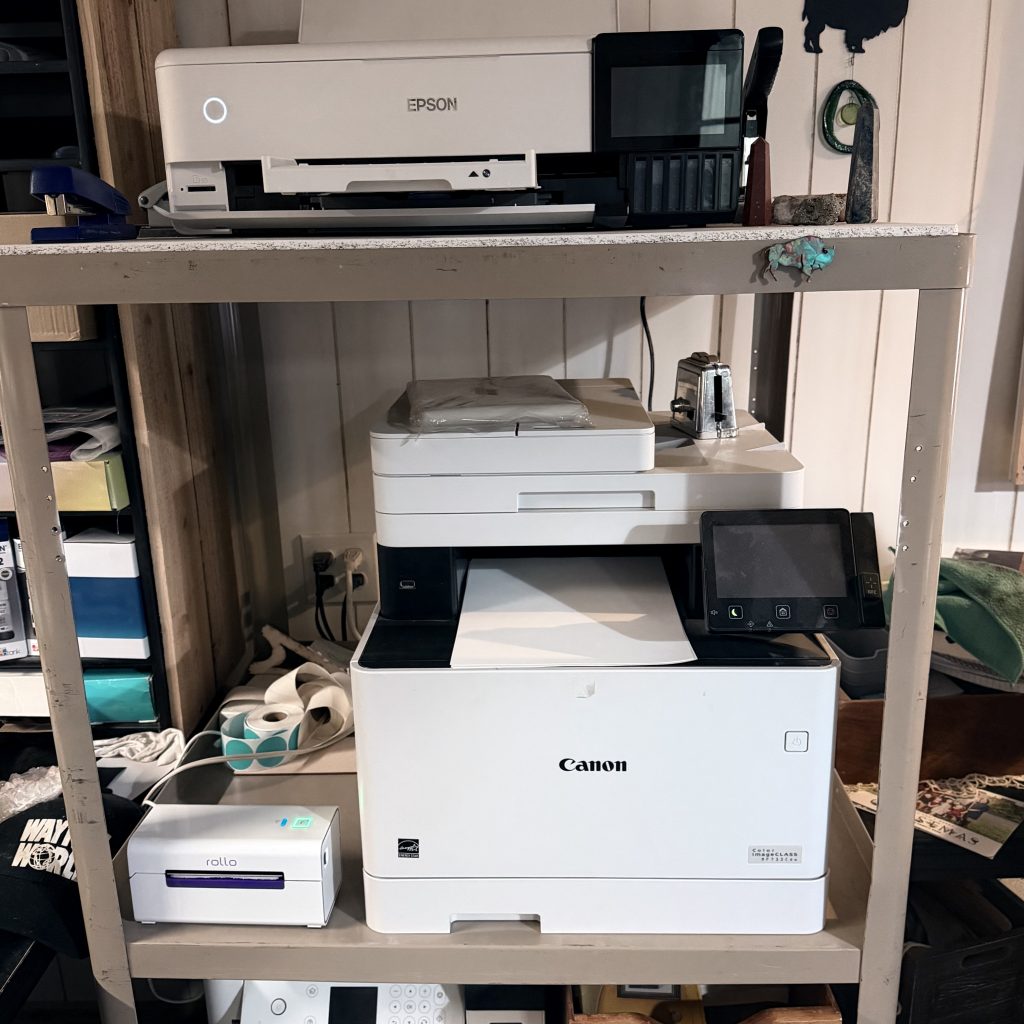
I waited and waited to buy a Rollo thermal label printer.
For way too long, I would download my shipping labels, size them down in Adobe Illustrator to fit my little boxes, print them, fold them, tape the heck out of them, and waste so much time.
Then I noticed Etsy had a built-in 4×6 label size and thought, “Maybe I deserve this little fella.”
But obviously, I waited a good long while before actually pulling the trigger.
Oh my goodness.
This thing is amazing.
It does not need ink. It does not need tape. It does not require me to get angry for it to work. I can print all the shipping labels at once, peel them, and plop them right onto my little boxes.
What used to take me close to an hour can now take just a few minutes.
And even if Dad steals the tape gun again, I can at least label my boxes like a professional.
Why we keep using it: A thermal label printer saves time, cuts down on printer drama, and makes shipping feel like a real workflow.
Good for: Etsy sellers, Shopify stores, online boutiques, handmade businesses, and anyone who ships more than a few packages a week.
If you are still printing shipping labels on regular paper and taping them down like I did, I say this with love: there is an easier way.
4. So Many Black Sharpies Because They Disappear
We all have brands we love.
Some people are really into sneakers. Some people love fancy handbags. I am really into pens.
Even as a young lass, I was a Crayola snob.
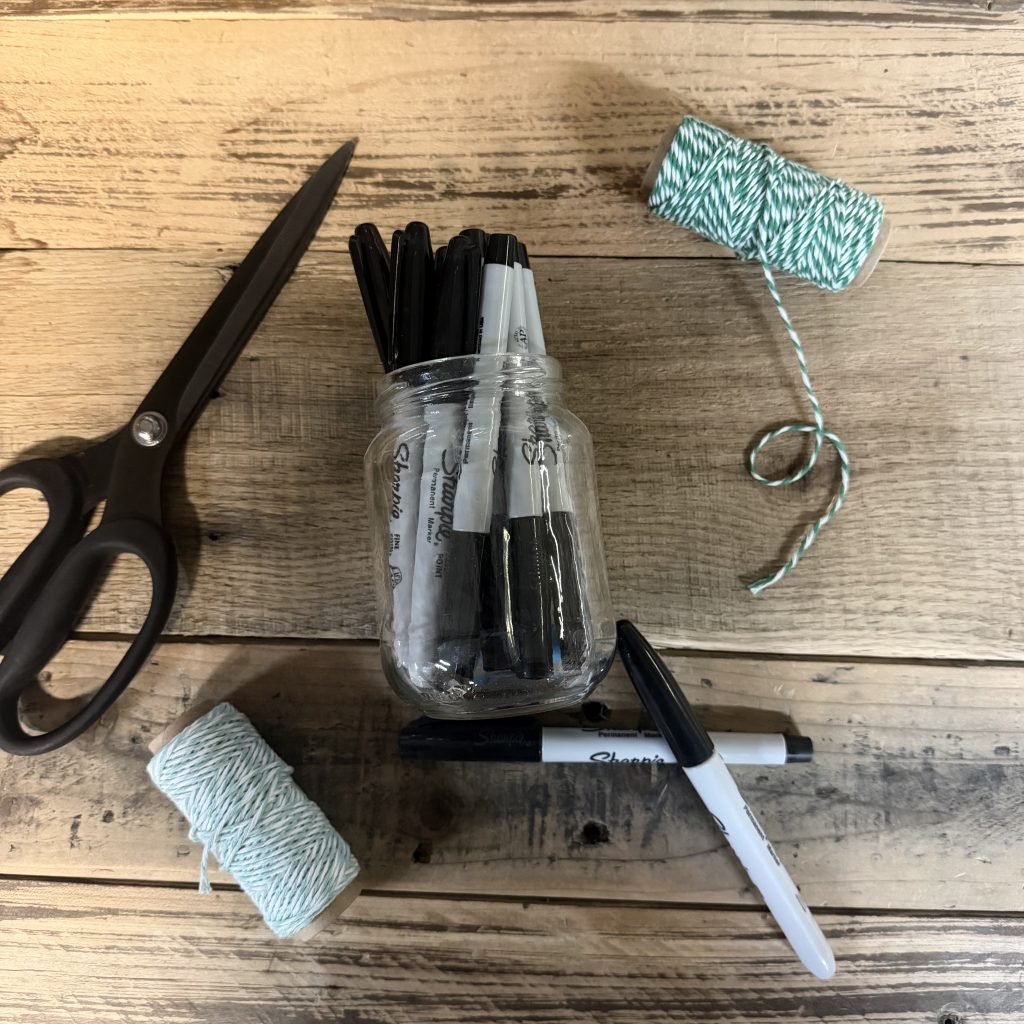
My desk is a little chaotic at all times, and there are currently at least three types of black Sharpies on it. I love the way they write. I love the way they feel. I love that they make me feel like I have my life together, even when there are 37 things on my desk and three people asking me questions at once.
We write little postcards when we ship Etsy orders, and Ultra Fine Sharpies write beautifully on the shiny paper. At this point, I consider them a shipping supply.
Not optional.
Necessary.
Can’t work without them.
If you want to buy me a variety pack of Sharpies for Christmas, I might love you forever.
If you steal all the Sharpies off my desk, we are going to have words.
Why we keep buying them: Good pens make everyday shop tasks easier — labeling, notes, packaging, postcards, order details, and all the tiny things that keep a small business moving.
Good for: Shipping stations, retail counters, craft rooms, classrooms, offices, and anyone who writes notes all day long.
Also, no one knows where Sharpies go. We suspect there is a portal somewhere in the building.
5. The Tiny Paper Cutter That Works Overtime
We are a family of designers.
Well, not Dad. He says he has people for that.
Those people are me and Deb.
Anyway, we design things and then we actually make the things. We do not outsource everything to print-on-demand companies and call it a day.
Sorry. Let me climb down off my soapbox and get back to the point.
When we make a cute sublimated coffee mug, we have to print, cut, tape, press, package, and do the whole process. A terribly crucial part of most paper crafting is cutting straight.
And your girl is not naturally gifted in this area.
Ask Deb. She will tell you.
But I am pretty handy with a paper cutter.
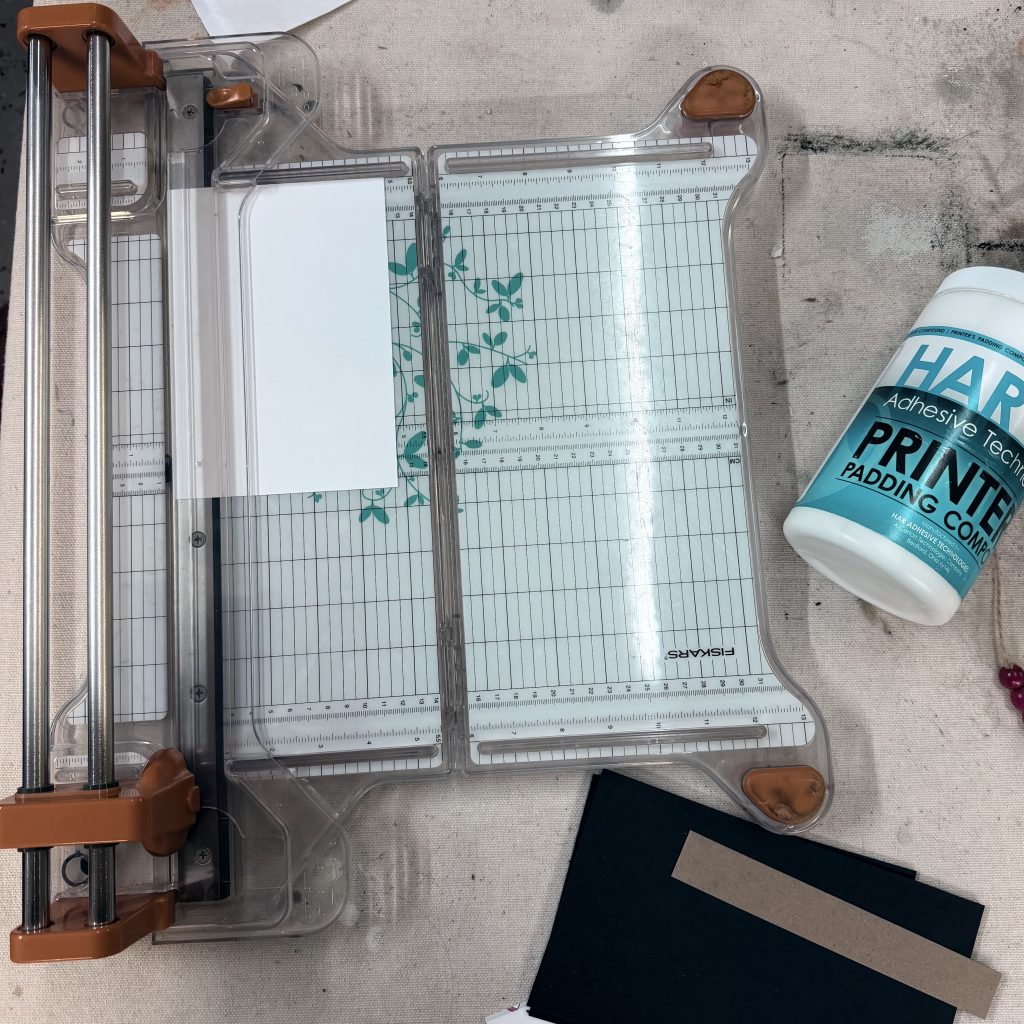
My favorite for everyday cutting is a 12-inch multi-depth paper cutter that can handle regular paper, cardstock, cardboard, chipboard, and multiple sheets at once. She is a bit of a splurge compared to the tiniest basic paper trimmers, but sometimes you need to cut something thicker and hold it down so it stays straight.
Trust me, earrings hang much straighter when you do not cut their little cards by hand.
We recently got a big guillotine cutter for notepads and sticky notes, and she has her place. But if I am cutting one or two pieces of paper, I would much rather grab my trusty little paper cutter.
She is the microwave of paper cutters.
Small, handy, and used way more often than you’d think.
Why we keep using it: A good everyday paper cutter saves time, keeps projects neater, and helps small handmade products look more professional.
Good for: Sublimation, stationery, greeting cards, packaging inserts, earring cards, labels, small batch paper goods, and craft businesses.
6. Epson 8550: The King of Creative Printers
We screen print, right?
We have been printing our own tees since around 2015, and when we bought our setup, it came with this giant black-and-white-only printer that could print 13×19 transparencies.
Sometimes it would just shoot big ink globs all over everything and ruin the transparency.
But to print big enough to look good on a shirt, it was a necessary evil, and we made her last as long as humanly possible. Ink explosions and all.
Then one day, she finally died.
Every part of me wanted to take a baseball bat to her and smash her to a pulp.
But no one would let me.
Boo.
They did, however, let me get a fancy color printer to replace the old beast.
The Epson 8550 is majestic.
No ink blobs. Deep, rich color. And not only does it work great for our creative print needs, but it is also perfect for stationery, family photos, greeting cards, and other shop projects.
I have never been great about printing family photos, but now I can, and they look beautiful. I can also make my own greeting cards, which makes my little paper-loving heart very happy.
Nothing is better than a machine that does more than you originally needed it to do.
Why we keep using it: A good creative printer opens up more possibilities — from transparencies and stationery to photos, cards, and small product development.
Good for: Creative businesses, stationery makers, sublimation-adjacent workflows, designers, photographers, and shops that want more control over printed pieces.
7. Cheap Plywood Is Never a Good Idea, Get the Good Stuff
When we first started lasering with our AP Lazer back in 2019, there was a lot we did not know.
Sometimes what you do not know causes tiny fires.
Literally.
We would test projects on cheap plywood with way too much glue in it, or even worse, cardboard. Then poof. Tiny fire. Then we had to sand the heck out of the back to get the char off the wood.
Luckily, failure is a great teacher.
Better materials make better products.
There are lots of sources for high-quality plywood depending on your needs and setup. We buy ours from a local wood supplier in 5×5 sheets, and Dad cuts them down on his table saw into sizes that are easier to toss into the laser.
But you can also buy laser plywood in smaller sheets, which is great if you are just starting or do not want to wrestle a full sheet of plywood like you are auditioning for a lumberjack competition.
What you want is plywood with a nice smooth finish, consistent thickness, minimal football patches, and a surface that cleans up nicely after engraving.
Walk around your local vendor mall or craft fair, and you can often tell who is using cheap wood and who is using the good stuff. Big old fat wood grain, blurry engraving, inconsistent cuts, and weird charred edges?
No thank you.
Why we care about plywood quality: Good plywood cuts cleaner, engraves better, saves sanding time, and makes your finished products look more professional.
Good for: Laser owners, ornament makers, sign makers, craft businesses, Etsy sellers, and anyone making wood products in batches.
Good materials will not fix every mistake, but bad materials can absolutely make you think you are worse at this than you are.
8. LA’s Awesome vs. Hydrogen Peroxide vs. Sandpaper: What We Use for Laser Cleanup
Speaking of cleaning, that is part of laser engraving.
We are making tiny fires, after all.
Obviously, we use an exhaust system and all the proper safety things, but when you cut wood with a laser beam, there is still soot and char that needs to be handled.
There are three common cleanup options people talk about online, and we use all three in our shop depending on the project: LA’s Awesome, hydrogen peroxide, and sandpaper.
They all have their place.
LA’s Awesome
LA’s Awesome is a very inexpensive yellow household cleaner, and it does a great job. But it has a smell, and that is a big negative for me.
We like it best for cleaning leatherette journals and non-wood items. I also use it to clean cast iron before I laser it, so it is a good universal cleaner.
Useful? Yes.
My favorite smell? Absolutely not.
Hydrogen Peroxide
Hydrogen peroxide in a little spray bottle is my personal favorite for cleaning char and soot off wooden magnets and ornaments.
It is one of those things I get weirdly attached to, and I hate when someone steals my bottle.
Its only real downfall is that it can temporarily bleach your fingers, which looks kind of creepy. So maybe wear gloves if that bothers you or if you are cleaning a lot of pieces.
Is it glamorous? No.
Does it work beautifully for us? Absolutely.
Sandpaper
Sandpaper is tried and true. It works great on wood and requires no drying time — just some elbow grease.
My issue is that it creates dust, and Dad makes sawdust clouds that land all over the store.
And he never dusts.
Rude.
Why cleanup supplies matter: Good cleanup tools help your laser projects look finished, polished, and ready to sell.
Good for: Laser engraving, wood ornaments, leatherette journals, magnets, signs, and maker shops that want cleaner finished products.
Our honest answer? We keep all three around because different projects need different cleanup methods.
9. Big Magnets for Laser Engraving
Big magnets — and I mean big strong magnets — are one of the most underrated laser engraving supplies in our shop.
They are also one of the cheapest things that can make a surprising difference.
We use magnets to keep things straight and secure in the laser bed. They are great for holding down a wonky board, lining up production pieces, keeping lightweight materials from shifting, or helping keep things flat.
Deb also had the great idea to raise plywood up and sandwich it between magnets to lift the wood off the honeycomb bed. This can help reduce charring on the back of the wood.
It works really well, with one little exception: if you need the inside bits that fall through, those pieces can get extra charred.
Ask us how we know.
Why we keep magnets near the laser: They help with alignment, material control, flatter cuts, and smoother production.
Good for: Laser owners, woodworkers, sign makers, ornament makers, and anyone cutting or engraving thin material.
Tiny accessories like magnets are not flashy, but they can save a project from turning into a tiny emotional event.
10. xTool F1 Ultra: The Little Laser We Use All the Time
In my humble opinion, lasers are like kitchen appliances.
They all have their sweet spot.
You would not want to cook Thanksgiving dinner using only a toaster. In the same way, you cannot laser all things perfectly with one type of laser.
Deb thinks lasers are like Pokémon and you gotta catch them all.
I think you just need the right machines for the things you actually want to cut and engrave.
For Deb, that is apparently all the things.
So I suppose she can catch them all.
We have our AP Lazer. His name is Ronald Raygun because I am strange and like to name the robots. He is our big guy and does the bulk of our production work.
In my kitchen analogy, he is the oven.
Big. Reliable. Holds a lot. Not always the fastest.
The xTool F1 Ultra is more like the microwave.
Fast. Smaller. Precise. Handy.
This little machine can engrave a magnet incredibly quickly and is great for personalizing items while customers watch. We host a sixth-grade field trip each year, and this year we let the kids write their names on an iPad and engraved them in front of their eyes.
Not too many lasers can do that quickly, competently, and safely with a crowd of excited twelve-year-olds watching.
And what is great about it is that there is hardly any cleanup needed after many items come out of the laser.
This sucker is handy.
Why we use it: It is fast, compact, and great for small personalized items, live demos, and customer-facing engraving moments.
Good for: Maker shops, personalization businesses, event engraving, small product batches, demos, and businesses that want a smaller laser for quick jobs.
11. Bonus – Why We Love a 360 Hotronix Hat Press
Have you ever tried to super glue a leather patch to a hat while holding it down with a ten-pound dumbbell?
Because I have.
Let me tell you, this is not the way.
Our first big hat order was for a group of military guys, and we cut patches in very complicated shapes. Then we had to figure out how to apply those complicated shapes by hand.
Pro tip: don’t do that.
It was an incredibly time-consuming disaster.
To properly apply a leather hat patch to a trucker hat, like a Richardson 112, you need heat on the top and bottom of the hat, plus firm, consistent pressure.
You know what was designed to do just that?
A 360 hat press.
Not a ten-pound dumbbell.
This machine helps us press hats more consistently, more professionally, and much faster than our original “surely this will work” method.
It turns out, proper equipment is better than chaos and super glue.
Who knew?
Why we use it: A good hat press makes patch hats faster, cleaner, and more consistent.
Good for: Hat bars, leather patch hats, custom merch shops, small businesses, boutiques, and anyone making hats in batches.
Do not be a dumbbell. Use the machine made for the job.
12. When Nothing Else Works, an Espresso Machine Does the Trick
Dad is old school. He can drink two entire pots of black coffee by noon.
That is not my vibe.
And I do not have time to leave the shop when I need caffeine, so we have an espresso machine. I can slip away, make myself a nice iced latte, and come back downstairs a happier person.
I usually make one for everybody, and magically we all get less grumpy.
The murderous instinct drops for the day.
So basically, find the thing that makes all the people less grumpy and get one of those machines.
For us, it is espresso.
Why we keep it around: Caffeine improves morale, and morale matters when your family works together every day.
Good for: Family businesses, small shops, studios, offices, tired makers, and anyone who gets a little nicer after an iced latte.
Is an espresso machine a traditional business tool?
Maybe not.
Is it a peacekeeping device?
Absolutely.
Final Thoughts: Tools Matter, But So Does Sanity
Running a small business is hard sometimes.
Throw in family, production deadlines, Etsy orders, laser engraving, classes, customers, missing Sharpies, stolen scissors, and a tape gun that has mysteriously vanished again, and things can get a little extra crazy.
Mostly in a good way.
The right tools do not solve every problem, but they do make the day smoother. They save time. They lower frustration. They help your products look better. They keep the work moving.
And sometimes, they keep your family from lovingly threatening each other over office supplies.
So if you are building a small maker business, here is my advice: start with tools that solve real problems in your actual workflow.
Also, label your scissors.
Hide your tape gun.
Buy more Sharpies than you think you need.
And never, ever use the fabric scissors incorrectly.
Love that an Espresso machine is the last resort! Caffeine makes the world go round!
Enjoy every single day